Missed timing has an afterlife. It lingers in roads not taken and in love that missed its hour. A past possibility can quietly judge every future choice.
Lanusa’s “Line After Line” begins within that difficult space. This slow-burning single looks at longing without treating it as a problem to solve.
Instead, it sits beside acceptance and lets both feelings speak. Neo-soul warmth, indie folk storytelling, a slow groove, and soulful vocals frame a connection that never became real but still shapes the heart’s private arithmetic.
It is a patient piece of writing about what remains when romance does not become history.
The first lyric arrives in plain language: “What can I say, it’s always been you, boy, they’ve all been decoys.” It is an admission that leaves little room for disguise.
The line does not offer a grand confession after the fact. Rather, it reveals that comparison has been at work all along. Every later love arrives near an earlier standard, and none can quite escape its shadow.
Lanusa focuses less on loud heartbreak. Instead, the song considers the ache of a door that never opened. That makes “Line After Line” a considered single review subject, especially for listeners drawn to songwriting that allows regret to remain unresolved.
Lanusa describes the release as a song about knowing it is too late, while also recognising that a person can remain defining even when a relationship never happened.
That paradox gives the writing its shape. The lost love is not framed as a memory alone, because there is no shared romance to revisit. It exists as possibility, a suspended image with enough emotional weight to set the standard for whatever follows.

The idea recalls an uncompleted sketch, where a few lines on paper can suggest a whole figure. Here, absence carries its own detail. It can be vivid precisely because life never had the chance to test it.
The production choices named around “Line After Line” support that sense of held-back feeling. A slow groove and rim shots bring measured movement to the track.
They give the song a pulse without forcing it toward melodrama. Meanwhile, the spacious approach allows the vocal to carry the lyric’s directness.
Lanusa’s soulful delivery suits a song built on restraint. It can hold longing and acceptance in the same phrase, which is where the record’s emotional tension becomes most persuasive.
Neo-soul warmth and indie folk storytelling meet in Lanusa’s “hipster jazz standards.” The phrase is playful, yet it helps explain the release’s unhurried character.
Jazz sensibility appears in the space around the words. It also appears in the track’s refusal to hurry toward a tidy ending. The folk element keeps the language close to lived experience.
Together, these approaches place “Line After Line” in new indie folk. There, groove matters as much as narrative.
The song’s restraint is its defining strength, though it also asks for patience. Listeners who want a sharp turn or instant release may find its slow pace demanding.
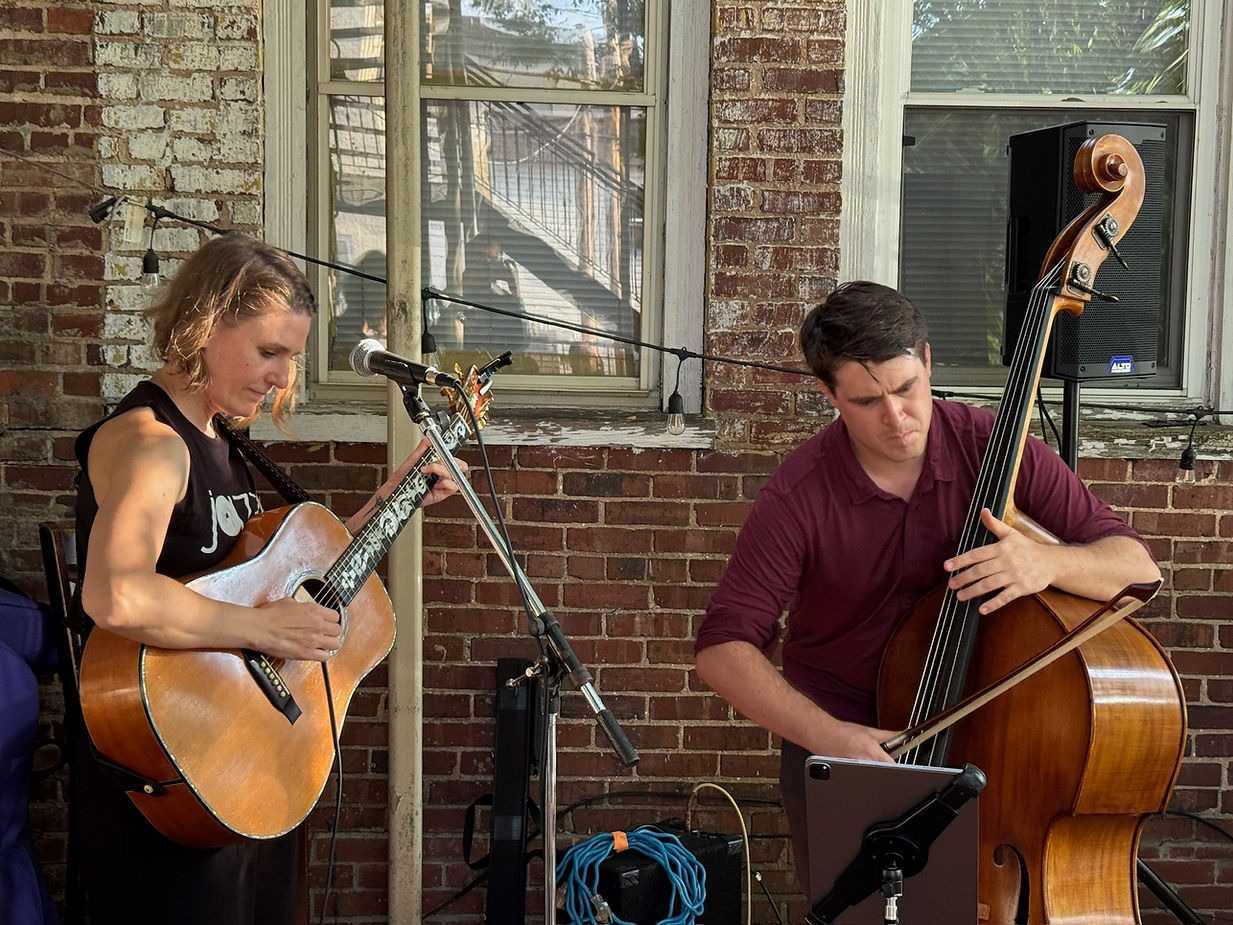
Lanusa Lives “Line After Line” With Missed Love
Yet that patience appears intentional. The arrangement reflects a feeling that cannot be rushed away, because there was no dramatic ending to process.
There was only the gradual recognition that someone has become a lasting point of reference. The repeated emotional situation gives the single a quietly intimate scale.
A rim shot can feel like a small punctuation mark, and a pause can carry the force of an answer left unsaid.
That focus gives Lanusa’s release potential with audiences who favour poetic narratives, soulful vocals, and carefully paced new music. It also gives the song room beyond private listening.
Its groove-forward frame could hold in a live setting, while its opening lyric offers a concise point of entry for listeners hearing Lanusa for the first time.
Still, the track does not chase an easy slogan. It stays close to a harder truth, that acceptance may involve carrying a feeling rather than conquering it.
“Line After Line” finds dignity in that unfinished state. Lanusa does not promise a cure for missed timing.
The single asks a quieter question instead: when a love remained possibility, how long can its outline shape the life that comes after?
https://open.spotify.com/album/0wtP7AzQ8RtPwjl4PnRDtN





No comments:
Post a Comment