A fortieth birthday can invite reckoning, a count of plans delayed and rooms left unopened. Zora Kirin chooses another ritual.
Her debut EP, "The Bones Are Beautiful", gathers four songs from nearly two decades of writing into a compact folk cycle about moving through tenderness, appetite, doubt, and loss.
The record makes optimism credible by refusing to sand away difficulty. Its title carries that posture neatly: bones imply mortality, but also structure, memory, and endurance.
For an artist whose public work has urged people to live broadly, this EP feels less like a late arrival than a return to a language she never fully set aside.
Kirin’s path gives this release an unusual scale. She began classical violin study at six, sang the Rutter Requiem at Carnegie Hall at sixteen, and later fronted The Ancients before her public life expanded into entrepreneurship, anthropology, publishing, and advocacy.
She has founded Anodyne Magazine, written Stories of Elders, and spoken on TEDx stages, work concerned with paradigm shifts and the social arrangements people take for granted.
This is not résumé decoration. It gives the EP’s interest in a self made over time real weight. Kirin’s return to song permits several former selves to occupy the same room.
The record is called hope core, a useful term because it rejects cheerfulness as performance. Its four-song design follows spring, summer, autumn, and winter.
“Fly On” holds early-life radiance. “Let’s Play Pretend” treats young attraction with a clear-eyed sense of play. “Step Forth” turns toward hard-earned counsel, while “Mulberry Tree” addresses grief through continued care.
The sequence has the logic of a book of hours, medieval collections that marked ordinary time through repeated acts of attention.
Kirin applies that instinct to a contemporary folk EP, asking us to consider a life as changing conditions rather than a straight ascent.
At seventeen minutes, "The Bones Are Beautiful" has little interest in excess. Alyssa Wilkens’s credited production keeps focus on an acoustic folk foundation, and Kirin’s guitar and voice carry the narrative frame.
That economy suits the writing. Direct addresses and recurring images of light, rain, leaves, and seasonal change receive room to register. Seth Munson’s mastering and Akhilesh Babu’s cover image complete a project that favors clear authorship over mystique.
It is intimate in scale, yet its lyrics repeatedly reach toward communal feeling.
The strongest choice is Kirin’s refusal to let hope become an instruction to ignore pain. “Mulberry Tree,” the closing winter piece, speaks from beyond death to someone left behind, offering solace while permitting grief its weather.
It does not hurry sorrow toward a clean resolution. Earlier, “Step Forth” places encouragement beside the admission that dark days arrive and can undo a person.
That pairing gives the EP ethical force. Kirin is not selling immunity from disappointment; she proposes that continuing to care, breathe, sing, and notice is a form of courage.
Her writing understands that consolation can be serious work.
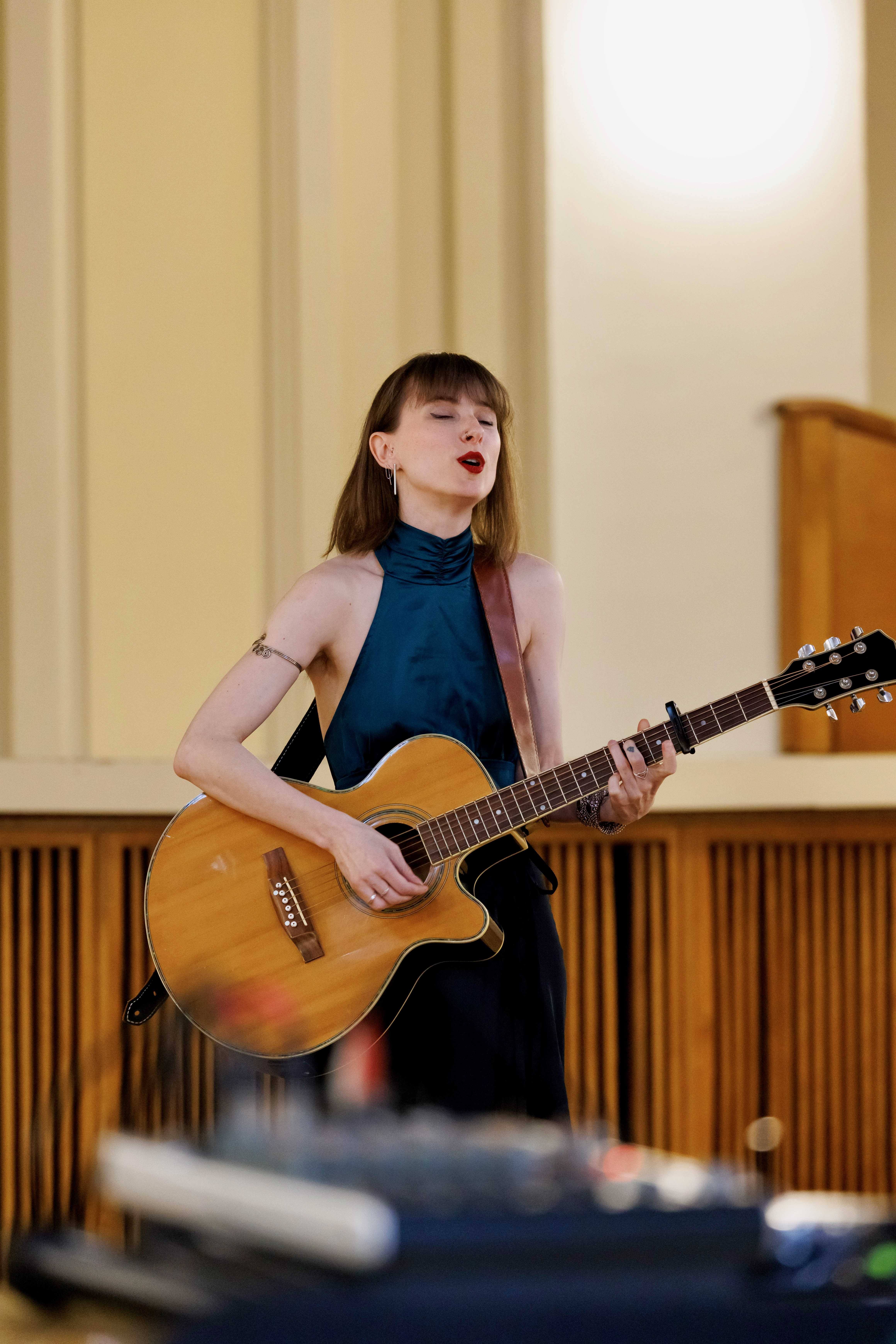
Zora Kirin Makes Mortality Sound Beautiful On "The Bones Are Beautiful"
There is generosity in the way the record lets life stages sit beside one another. The exuberance of “Fly On” is not embarrassed by the later songs’ knowledge of mortality.
The flirtation in “Let’s Play Pretend” is not reduced to a lesson. Each chapter retains its own temperature, making the seasonal form feel earned. Folk has often been a home for plain speech and portable wisdom, and Kirin uses those qualities without antique costume.
Her Berlin setting matters, too. In a city marketed through speed, night, and electronic force, an acoustic singer-songwriter record that makes space for reflection can feel quietly radical.
A longer release could give Kirin room to complicate this four-part design or let a narrative linger past its first resolution. Here, concision is a strength.
The EP sets out a clear emotional proposition and follows it with discipline. For listeners drawn to indie folk that values lyric perspective, seasonal imagery, and an adult voice, this is an inviting solo statement.
It also has a natural place on reflective folk playlists and in a live room where the words can meet attention.
"The Bones Are Beautiful" leaves a modest but durable question. If hope is not denial, but a practice carried through every season, what changes when we treat it with the seriousness usually reserved for grief?
https://open.spotify.com/album/5jnvPgv46rbqXfE8EXRznO




No comments:
Post a Comment