A rumour is public theatre in miniature. It has a narrator, an audience and, sooner or later, a price for the person holding the most damaging fact.
Lyons Lane builds the announced opening of its debut EP, “You’ll Talk About It!”, around that price. “Don’t Shoot The Messenger” follows a man who tells another man about a girlfriend’s infidelity, only for the bearer of the news to be implicated himself.
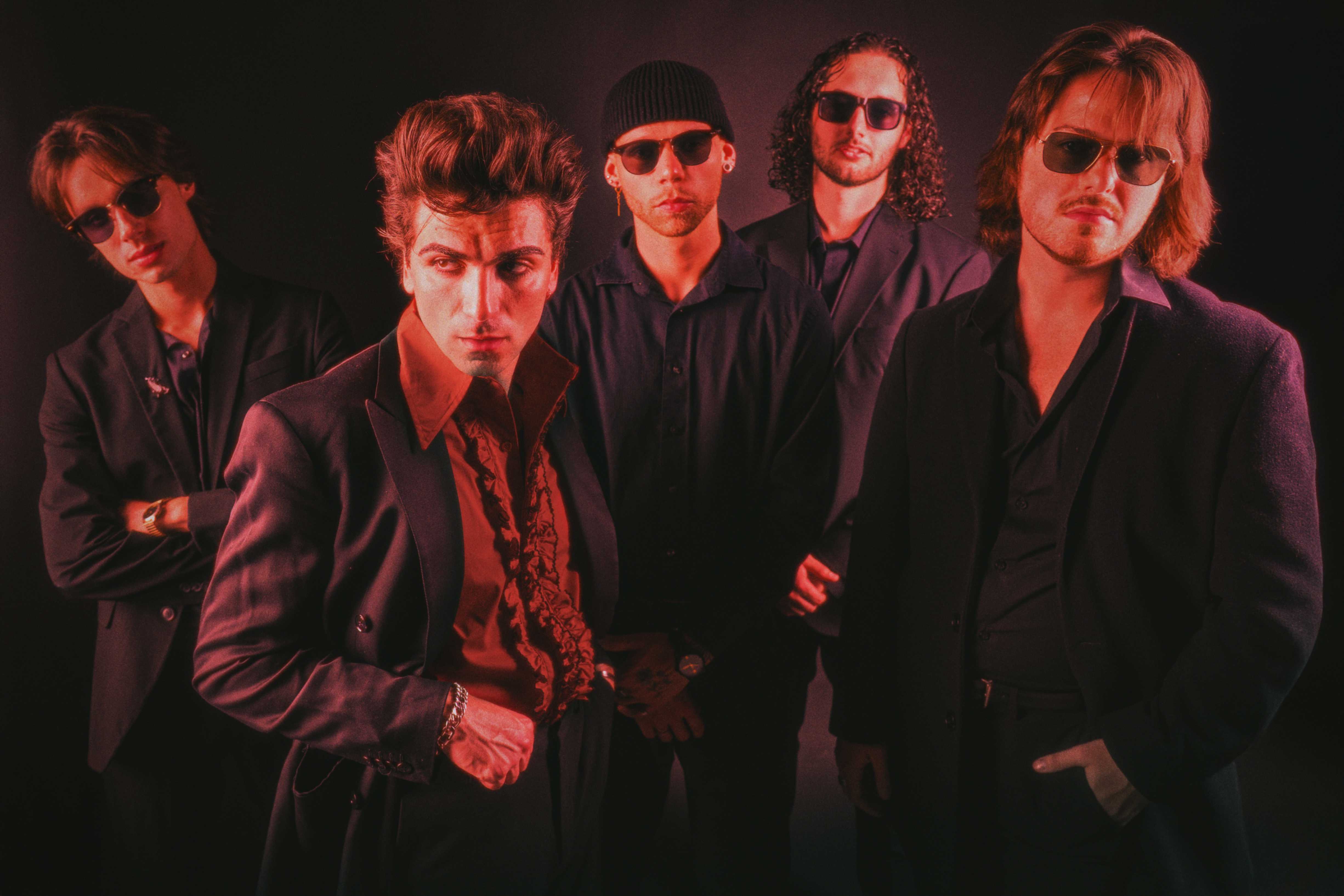
That premise gives this advance EP review a clear point of entry: a Detroit five-piece using rockabilly, doo-wop and Americana grammar to stage love, loss, obsession and ego as a problem of storytelling.
Lyons Lane comes to this debut after a hard-earned barroom education, not short clips. Songwriter and vocalist Mark Leo began writing and playing at eight, then met Thomas “Tomcat” Thompson in high school over their shared love of rockabilly and doo-wop.
The pair later played four-hour engagements dominated by 1950s covers before expanding to a five-piece. Guitarist Darrian Loehne, tenor saxophonist Matty Stevens and drummer Shane Wheeler complete the line-up, which the press release identifies as central to the group’s horn-led attack.
The record took two years at Rustbelt Studios in Royal Oak, Michigan, with producer Jake Halkey. The studio has a local association with Greta Van Fleet, yet Lyons Lane’s case rests on a different proposition: that old forms can carry a fresh, uncomfortable joke.
Their audience has grown through a viral “Love Potion No. 9” cover, nearly two million Spotify streams and a sold-out night at Ferndale’s Magic Bag Theatre, where the release notes place more than 500 people in the room.
WDET featured Leo, Thompson and Stevens in its studio during 2025.
Against that background, “Don’t Shoot The Messenger” is an astute title for a record concerned with desire and self-regard. The old plea asks us to spare the person delivering bad news.
Lyons Lane’s scenario refuses that courtesy, because the messenger has helped create the disaster he narrates. The setup has something of Restoration comedy, where romantic debts are paid through public embarrassment rather than cash.
It also suits a band whose early work involved reviving communal repertory in bars: the story needs a crowd, a reaction and a punchline that curdles after the laugh.
The press release does not disclose the final arrangements, lyrics or mix decisions for the six-track EP, and a fair assessment should not pretend otherwise.
Still, the available details point to a useful tension. Rockabilly’s clipped momentum, doo-wop’s group-harmony tradition and Americana’s narrative instinct provide an apt frame for stories of romantic damage, while the band’s contemporary alternative edge may keep the material from becoming costume drama.
The public precursor “Emma’s Addiction” gives that argument some basis. An independent We All Want Someone review heard 1960s energy, old-school instrumentation, crooner-like inflections, horns and cinematic pop in that track.
It is evidence of a public-facing calling card, not a licence to pre-judge every unreleased song.

Lyons Lane Brings The Crossfire To “You’ll Talk About It!”
That restraint is part of the appeal. “You’ll Talk About It!” has been presented as an EP about love, loss, obsession and ego, but its announced opening chooses wit over grand proclamation.
There is craft in making compromised behaviour interesting without asking the audience to excuse it. Leo’s writing can turn that premise into a recurring question about who gets to control a story after the damage is done.
The release’s title then takes on an extra charge. Conversation can be publicity, but it can also be consequence.
For listeners drawn to emerging Detroit rock, retro pop, horn-led arrangements and sharply drawn character songs, Lyons Lane offers a persuasive prospect.
The Magic Bag sell-out and social response show that the group has already converted local attention into communal investment. The test on release day will be pacing: can six songs extend the opener’s tension without exhausting its joke, and can the past-facing references feel lived-in rather than ornamental?
The group has set itself a demanding standard by building expectations around personality. If “You’ll Talk About It!” gives its players enough room to complicate that first confession, the conversation may last well past its first telling.




No comments:
Post a Comment