Sargassi is back with "Un giorno qualunque," a song that turns everyday moments into something bigger, a look at change, resilience, and the meaning hiding in ordinary life. Written during the recording sessions for the album "Va' dove t'importa, cuore," the track showed up unplanned but quickly became a key part of the record. With honest lyrics and a bold artistic vision, Sargassi shines a light on the small moments that shape who we are.
In this interview, we get into the story behind "Un giorno qualunque," what sparked its message, and the creative process behind both the song and its stop-motion video. Sargassi also opens up about how childhood drawing, storytelling, and music came together to build a whole artistic world, including the character and visuals tied to the project.
From recording at Bonsai Studio with trusted collaborators to reaching the Sanremo Rock national final and building an identity that goes beyond music, Sargassi looks back on the journey so far. With "Va' dove t'importa, cuore" earning a warm response from listeners, this conversation digs into creativity, persistence, and the beauty tucked inside everyday life.
Watch Un giorno qualunque
Follow Sargassi on
Facebook
Bandcamp
Youtube
Instagram
“Un giorno qualunque” is such a vivid title, a day like any other, yet the song feels anything but ordinary. What was going on in your life when you wrote it?
I wrote Un giorno qualunque during the recording sessions for Va’ dove t’importa, cuore at Bonsai Studio in Orvieto. The album’s tracklist had already been finalized, but the song came out all at once—music and lyrics—and I immediately knew it had to be part of the record.
What fascinated me was the idea that even the most ordinary day can hide a small revolution. Sometimes changing your life doesn’t begin with a dramatic event; it begins with deciding not to surrender to routine. That’s what the song is really about.
This is the fourth single from “Va’ dove t’importa, cuore,” and also the fourth stop-motion episode in your visual story. How did you first land on stop motion as your way of bringing these songs to Life
As a child, drawing was my first creative language. Then music gradually took over, and for years I devoted myself to writing songs, stories and wordplay.
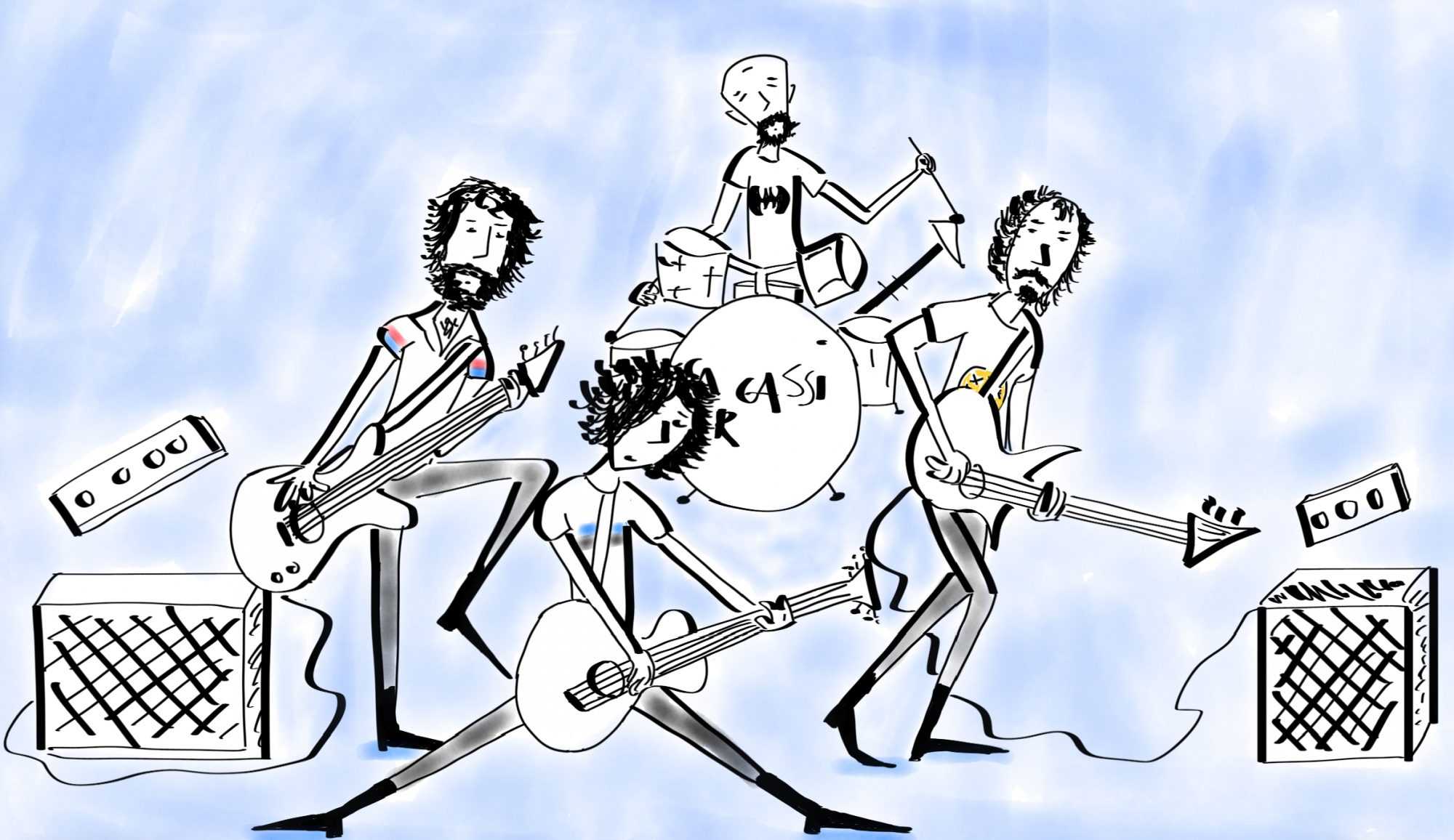
Four years ago, while shaping the identity of Sargassi, I felt the need to reconnect with that forgotten part of myself. I started drawing again—first cartoons, then illustrated stories, and finally stop-motion videos starring my alter ego, an eel, a female character and a band. It all became part of the same artistic universe.
The lyrics move between disillusionment and small daily rebellions, waking up at five, an empty fridge, missed kisses. How much of that comes from real moments in your own life?
Almost everything starts from something I’ve lived, witnessed or imagined could happen to me. The empty fridge is real. Waking up too early because your mind won’t let you sleep is real too. Of course, songwriting transforms reality. I’m not interested in writing a diary; I’m interested in taking small details and making them belong to anyone who’s listening. If someone hears the song and thinks, “I’ve felt exactly like that,” then those details have done their job.
Almost everything starts from something I’ve lived, witnessed or imagined could happen to me.
You recorded this at Bonsai Studio again, working with Luca, Emanuele, Emanuele, and Andrea. What’s it like returning to that same space for your second album?
It felt like coming home, but with new stories to tell. When you already trust the people around you, you spend less time explaining and more time creating. Andrea Mescolini understands the emotional direction I’m looking for, and all the friends and musicians I involve in the project always bring ideas that make the songs better than they were in my head. That’s something I never take for granted.
The name Sargassi comes from the Sargasso Sea, tied to that incredible journey eels make across the ocean. Why did that story feel like the right metaphor for your music?
I’ve always been fascinated by the mystery of eel migration. They travel thousands of kilometres towards a place they have never seen, guided by something we still don’t completely understand. I think writing songs feels very similar. Most of the time you don’t know exactly where you’re going—you simply trust an instinct. I like the idea that we’re all following an invisible compass, even when we think we’re lost.
Since 2020, you’ve gone from recording your debut album to reaching the Sanremo Rock national final at the Ariston, and even becoming a comic book character. Looking back, what moment felt like the biggest turning point?
Oddly enough, it wasn’t playing on the Ariston stage, although that was unforgettable. The biggest turning point was realizing that Sargassi wasn’t just a music project anymore. When the drawings, the stories and the stop-motion videos became part of the same universe, I finally understood what I wanted this project to be. From that moment on, everything started making much more sense.
This song deals with resistance and starting over even when it feels impossible. Was there a specific moment of “ce la puoi fare” for you personally while making this record?
There wasn’t one big cinematic moment. It was a collection of small ones. Every time I thought a song wasn’t good enough and then found the right line. Every time I considered leaving a track off the album and decided to trust it instead. I think “ce la puoi fare” isn’t something you say once. It’s something you keep repeating quietly to yourself until, one day, you realize you actually made it.
https://open.spotify.com/artist/3ZHZzJqOx771PccOENkaAO
Your songs have this way of turning everyday routines into something almost theatrical. Is that a deliberate part of your songwriting process, or does it happen naturally?
It’s probably the most natural thing I do. I’ve always believed that extraordinary stories hide inside ordinary lives. An empty coffee cup, an old magazine in a waiting room, a train station, a supermarket… they’re never just objects or places. They’re stages where people carry their fears, hopes and contradictions. I simply try to listen carefully.
With “Va’ dove t’importa, cuore” now out and this being the fourth single, how do you feel the album has been received compared to what you imagined when you started writing it?
Honestly, it’s been received better than I expected. Independent artists often prepare themselves for disappointment because there are so many great records released every day. Instead, I’ve received thoughtful reviews from Italy and abroad, people have written to tell me about the songs that resonated with them, and that’s probably the greatest reward. You never know whether a song will find its listeners. When it happens, it’s a beautiful surprise.
What do you hope people feel or think about after watching this video and hearing “Un giorno qualunque” for the first time?
A few days ago, I read a comment under the Un giorno qualunque video that really stayed with me. It said: “Finally, a truly meaningful song—not just another shallow summer hit.” When someone connects with your music in that way, you realize you’ve probably done something right.




No comments:
Post a Comment