There's a group of tunes from the first several years of AT40 that could objectively be called Songs Casey Shouldn't Have Played, meaning they're pieces accidentally spun during production of the show that avoided detection until it was too late. A perusal through Pete Battistini's book on the AT40 shows of the 1970s reveals at least three instances when the B-side of a non-double-sided release is heard on the show: listeners wouldn't have encountered "I Ain't Got Time Anymore" by The Glass Bottle on 9/18/71, Rod Stewart's cover of the Jimi Hendrix composition "Angel" on 12/16/72, or "The Proud One" from the Osmonds on 8/23/75. (Unfortunately, the Stewart song spent only one week on the 40, so it's also a Song Casey Never Played.) A fourth, more subtle error occurred in the spring of 1977 when Pt. II of Marvin Gaye's "Got to Give It Up" was played instead of Pt. I during the first few weeks of its run.
A very different sort of mistake took place on the 12/19/70 show, when a single that had just fallen off the Hot 100 was nevertheless announced as the thirty-ninth most popular song in America. How could that have happened? It was a function of how the show was put together in its early days, a mad rush with little time to spare before it went out the door. I'm basing the explanation below on something posted a decade ago at the AT40 Fun & Games site, by message board member mkarns. I want to say I read a separate piece confirming his account when 12/19/70 was first rebroadcast back in 2014, but if I did, I'm not readily finding it again now. The account from mkarns is more than plausible.
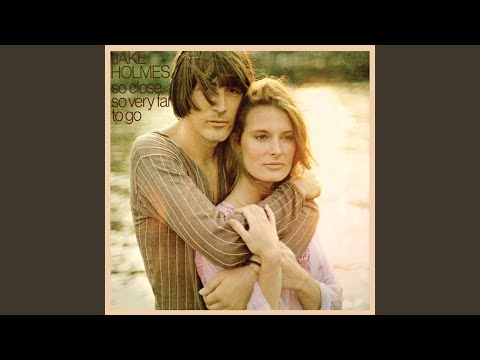
For the first nine months of its existence, American Top 40 worked a week ahead--the show broadcast on 7/4/70 was actually based on the 7/11 Billboard Hot 100, for instance. To do this, the staff at AT40 would receive the new chart information as soon as it was tabulated, well before the next issue of Billboard went to publication. Apparently, this was communicated over the phone; the person at Billboard would simply read off forty numbers that were the new Top 40 songs' Hot 100 chart positions from the previous week. (So, if a song had moved from #4 to #1 and the #2 song had fallen from #1, the first two numbers read would be 4-1.) This worked well as a means of efficiency, unless there was a misunderstanding. And so it happened this time: when the chart data for the 12/19/70 chart was read off, the 39th number the AT40 staffer heard was '57' when '67' was actually meant. Thus, "So Close," a pretty ballad about a relationship surviving turbulent times that had been in its final week on 12/12 after peaking at #49, was placed second in the queue of 45s for the recording of the 12/19 show, instead of Stephen Stills' "Love the One You're With."
--
Jake Holmes never legitimately hit the Top 40, but there are plenty of interesting things to say about him. A few highlights from his Wikipedia page:
--he and his (first?) wife Katherine recorded a parody folk album in the early '60s under the pseudonyms Allen & Grier;
--his song "Dazed and Confused" was, er, appropriated by Jimmy Page without credit, adapted first by the Yardbirds and then , much more famously, Led Zeppelin. It's only been in the last fifteen years that Holmes has been begrudgingly acknowledged by Page as an 'inspiration';
--he did a lot of jingle work, both writing and performing, after failing to generate any hits of his own. I'd say the two best-known are the U.S. Army's "Be All That You Can Be" and the "I'm a Pepper" campaign from, well, you know. That sounds like his voice in the Army commercial.
Holmes turns 85 in six days. I assume he's aware of his place in AT40 history, and I hope he's getting to listen to the rebroadcast this weekend.




No comments:
Post a Comment